Waves Groovy: Adding Playful Energy to Your Visuals
There's a certain energy that jumps off the page when a design refuses to take itself too seriously. It’s the kind of visual punch that stops a thumb from scrolling on social media or makes a customer pick up a product just to read the label. In the world of graphic design, typography is often the silent workhorse, but sometimes you need a font that screams rather than whispers. You need something that captures the free-spirited, analog warmth of the 1970s while maintaining a modern, polished edge. That is exactly the space where Waves Groovy lives—a display typeface that doesn't just sit on the canvas but dances across it.
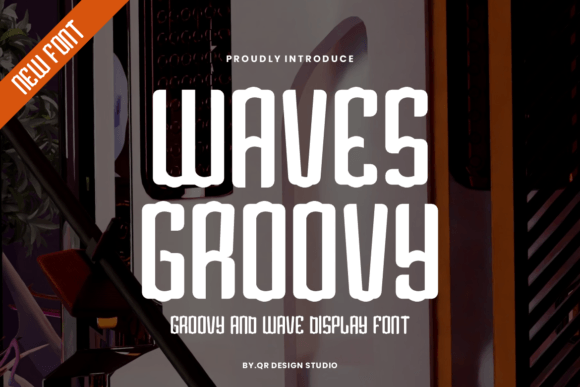
At first glance, this typeface is defined by its movement. The letterforms aren't rigid or static; they feature undulating curves and varying stroke widths that mimic the feel of a hand-drawn sign or a vintage album cover. It is a premium font choice that brings a distinct personality to the table. If you are working on a project that feels a bit too corporate or stiff, introducing this kind of wavy, organic typography can instantly soften the mood. It’s about breaking the grid in a way that feels intentional and stylistic, rather than chaotic.
Capturing the Retro Vibe Without Looking Dated
One of the hardest balances to strike in modern design is invoking nostalgia without looking like you haven't updated your software since 1995. Waves Groovy manages to bridge that gap. It leans heavily into the "groovy" aesthetic—think lava lamps, surf culture, and vintage concert posters—but it does so with clean lines and high legibility. This makes it a versatile asset for a variety of creative projects.
Consider the booming market for artisanal goods and handmade products. If you are a small business owner selling candles, soaps, or organic snacks, your packaging needs to communicate "crafted with care" and "fun" simultaneously. A standard sans serif font might look too sterile, while a script font might be too difficult to read from a distance. This wavy display font hits the sweet spot. It suggests that your product is approachable and enjoyable. It works beautifully on packaging design where you want the typography to act as a focal point, perhaps placed against a solid background color to let the curves of the letters truly stand out.
Strategic Applications for Brand Identity
When building a brand identity, consistency is key, but distinctiveness is the goal. You want your audience to recognize your "voice" before they even read the words. For entrepreneurs and content creators in the lifestyle, wellness, or entertainment niches, this typeface offers a strong visual shorthand for a specific vibe.
Album Covers and Editorial Design
If you are a musician or a podcast producer, the cover art is your first handshake with a potential listener. Waves Groovy is tailor-made for this. It evokes a sense of rhythm and audio movement. Paired with bold, psychedelic gradients or minimalist line art, it creates an instant mood. In editorial design, such as magazine headers or blog post titles, it can be used sparingly to draw attention to feature stories. Because it is a display font, it commands attention best at larger sizes. Using it for a pull quote or a section header can break up the monotony of body text and keep the reader engaged.
Merchandise and Physical Goods
Think about the current trend in streetwear and merchandise. Tote bags, t-shirts, and enamel pins often rely on typography to carry the message. A heavy, wavy font translates exceptionally well to screen printing and embroidery. It has enough weight to be durable in production, but enough flair to be fashionable. For a creative entrepreneur designing a capsule collection, this font style eliminates the need for complex illustrations; the text itself becomes the art.
Mastering the Art of Font Pairing
While Waves Groovy has a lot of personality, no font is an island. To use it effectively, you need to understand how to pair it with other typefaces to ensure readability and hierarchy. Because this font is decorative and high-impact, it should rarely be used for long-form body copy. Reading 500 words in a wavy, retro display font can be exhausting for the eyes.
Instead, pair it with a neutral foundation. A clean sans serif font is often the best companion. The simplicity of the sans serif acts as a canvas, allowing the groovy font to pop without competing for attention. For example, you might use Waves Groovy for the main headline of a landing page to set the tone, then switch to a legible geometric sans serif for the subheadings and the body text. This contrast creates a dynamic visual hierarchy that guides the viewer's eye naturally down the page.
Alternatively, if you are going for a more eclectic, "hipster" aesthetic, you could pair it with a structured serif font. The rigidity of the serif letters creates an interesting tension with the fluidity of the wavy letters, resulting in a design that feels curated and sophisticated. The key is to let the display font do the heavy lifting in terms of style, while the supporting fonts handle the information delivery.
Readability and Technical Considerations
As a designer or business owner, you have to think about the user experience. How will this font render on a mobile screen? Will it be legible on a billboard? When using a font like Waves Groovy, you have to be mindful of kerning—the space between letters. Wavy fonts often have unique shapes that can cause letters to crash into one another if the tracking is too tight.
Always test your typography in context. If you are designing a website, check how the font looks on different browsers and devices. If you are creating print materials, print a test copy to ensure the curves of the letters don't fill in or look muddy at smaller sizes. Generally, this style of font shines brightest when it has room to breathe. Increasing the letter spacing slightly can often enhance the legibility and give the design a more airy, relaxed feel that complements the "carefree" nature of the font.
Commercial Licensing and Project Scope
Before you finalize a design for a client or a product launch, it is crucial to understand the licensing of your design assets. Fonts are software, and using them commercially usually requires a specific license. Whether you are using this for a one-off logo design or a massive global marketing campaign, ensure your license covers your intended use. Most premium font marketplaces offer different tiers, such as desktop licenses for print, web font licenses for e-commerce sites, and app licenses for digital products.
For content creators and marketers, this is a vital step. You don't want to build a brand identity around a typeface only to find out you are in violation of the terms of service. Investing in a high-quality commercial font also signals professionalism. It shows that you respect the craft of typography and are serious about the quality of your visual assets.
Bringing It All Together
Ultimately, choosing a font is about choosing a voice. Waves Groovy is the voice of fun, nostalgia, and creativity. It is a tool for designers who want to inject personality into their work and for business owners who want to stand out in a crowded marketplace. Whether you are designing a flyer for a local festival, branding a new retro-themed cafe, or creating digital stickers for a messaging app, this typeface provides the visual flair needed to make a lasting impression.
It proves that typography doesn't have to be rigid or serious to be effective. Sometimes, the best way to communicate your message is to let the letters dance a little. By pairing this creative font with solid design principles and a clear brand strategy, you can create visuals that are not only beautiful but deeply engaging for your audience.