Children: A Font That Brings Playful Energy to Every Design
There’s something magnetic about a typeface that doesn’t take itself too seriously. In a design landscape often dominated by sleek minimalism and corporate neutrals, Children arrives like a burst of confetti—unapologetically fun, charmingly rounded, and radiating warmth. This isn’t a font trying to impress boardrooms; it’s here to make people smile, to evoke nostalgia, and to inject personality into projects that need a human touch. If you’ve ever felt that your designs lack a certain spark of joy, this might be the missing piece you didn’t know you were looking for.
More Than Just a Cute Face
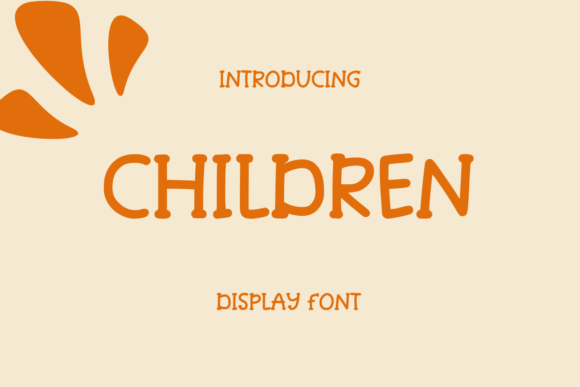
At first glance, Children presents itself as a playful display font with soft curves and a friendly demeanor. But looking closer reveals thoughtful design choices that elevate it beyond mere whimsy. The letterforms maintain excellent consistency, ensuring that even with its casual appearance, it remains highly legible at various sizes. This balance is crucial—too often, decorative fonts sacrifice readability for style, leaving designers frustrated when trying to use them in real-world applications. Children avoids this pitfall, making it surprisingly versatile for both digital and print contexts.
The visual personality here leans into rounded terminals, slightly uneven baselines that mimic hand-drawn qualities, and a generous x-height that keeps words feeling approachable. It’s the kind of typeface that feels familiar, like something from a beloved children’s book or a vintage candy wrapper, yet it carries enough modern refinement to work in contemporary design settings. Whether you’re working on branding for a family-oriented business, creating social media content that needs to stand out in crowded feeds, or designing packaging that appeals to a younger demographic, this font delivers character without compromising professionalism.
Where This Font Truly Shines
Consider the practical applications where a font like Children becomes invaluable. For small business owners crafting their brand identity, typography choices send immediate signals about values and personality. A bakery specializing in whimsical cupcakes, a children’s clothing boutique, a creative workshop studio, or a family-friendly entertainment venue—these are environments where a playful typeface isn’t just appropriate, it’s strategic. It tells customers exactly what kind of experience to expect before they even read a single word.
In logo design, Children offers a distinctive voice that’s difficult to replicate with standard sans serif or serif options. The inherent charm creates instant memorability, which is half the battle in brand recognition. Pair it with a clean sans serif for body text, and you’ve got a visual system that feels both energetic and balanced. This approach to font pairing—mixing personality with practicality—is something professional designers rely on constantly, and Children slots into that methodology beautifully.
Packaging design presents another natural fit. Think about products targeting families, kids, or anyone who appreciates a lighthearted aesthetic. Snack foods, craft supplies, educational materials, party decorations—these categories thrive on visual warmth. Using a creative font like Children on labels, boxes, and promotional materials creates an emotional connection that sterile typography simply cannot achieve. The font does heavy lifting in establishing tone before consumers even process the product information.
Practical Tips for Working With Playful Typography
Integrating a display font into your design toolkit requires some strategic thinking. First, always consider context. Children works brilliantly for headlines, logos, and accent text, but using it for long paragraphs would test anyone’s patience. Reserve it for moments where impact matters most—titles, call-to-action buttons, featured quotes, or hero sections on websites. Let it do what it does best: grab attention and set mood.
Font pairing deserves careful attention. Because Children carries such strong personality, it benefits from companions that complement rather than compete. A simple geometric sans serif creates pleasant contrast, letting the playful font take center stage while maintaining overall readability. Avoid pairing it with other highly decorative fonts unless you’re deliberately aiming for maximalist chaos—and even then, proceed with caution. The goal is visual harmony, not a typography battle.
Test your chosen combinations across different sizes and mediums before committing. A pairing that looks wonderful on your desktop screen might feel cramped on mobile devices or lose clarity when printed at smaller dimensions. Pay special attention to how letter spacing behaves; playful fonts sometimes need manual kerning adjustments to look their best in specific applications. These small refinements separate amateur layouts from polished professional work.
Readability considerations extend beyond just font choice. Background colors, contrast ratios, and surrounding whitespace all influence how effectively your typography communicates. Children performs best against clean, uncluttered backgrounds where its distinctive shapes can breathe. Avoid busy patterns or low-contrast color combinations that might muddy its charming details. Give it room to shine, and it will reward you with genuine visual appeal.
From Digital Screens to Physical Products
The versatility of a well-crafted display font extends across numerous creative domains. Social media graphics benefit enormously from typography with personality—posts need to stop scrollers mid-feed, and distinctive letterforms accomplish this better than generic alternatives. Whether you’re designing Instagram stories, Pinterest pins, Facebook event covers, or TikTok thumbnails, Children brings that eye-catching quality that algorithms and audiences both favor.
Blog headers and website sections gain character when you move beyond default web fonts. While body text should prioritize readability with clean web-safe or premium font options, strategic use of a playful display font for section titles or featured content blocks adds visual interest that keeps visitors engaged. It signals that your brand pays attention to details, which builds trust and credibility with your audience.
For entrepreneurs creating digital products—think printable planners, educational worksheets, party invitation templates, or downloadable wall art—Children offers immediate differentiation. The market for digital downloads is competitive, and unique typography helps products stand apart from template-heavy competitors. Customers notice when something feels custom and thoughtful rather than assembled from overused design assets.
Print materials haven’t lost their relevance either. Posters for community events, flyers for kids’ activities, menus for family restaurants, thank-you cards for customers—these tangible touchpoints benefit from warmth and approachability. The font translates well to physical formats, maintaining its charm whether screen-printed on merchandise or offset-printed on cardstock. Just ensure your print resolution and color settings preserve the subtle details that make the letterforms special.
Choosing Fonts That Work as Hard as You Do
Every design decision you make either reinforces or undermines your brand message. Typography, often underestimated, carries enormous weight in how audiences perceive your work. A premium font with multiple styles and weights gives you flexibility to create visual hierarchy, maintain consistency across platforms, and adapt to different contexts without losing your brand’s voice.
Before investing in any commercial font, review what’s actually included. Does it offer multiple weights? Are there alternate characters or ligatures? What about language support? Understanding the full scope of what you’re purchasing helps you maximize value and avoid discovering limitations mid-project. Licensing terms matter equally—ensure the font’s commercial license covers your intended uses, whether that’s client work, merchandise production, or digital distribution.
Ultimately, the best typography choices feel invisible in their effectiveness. They support your message, reinforce your brand identity, and create emotional resonance without drawing attention to themselves as design elements. Children achieves this with remarkable grace—its playfulness serves a purpose, its warmth builds connection, and its clarity ensures communication never suffers for the sake of style. For designers, creators, and business owners who understand that personality is a competitive advantage, this font earns its place in any thoughtfully curated design toolkit.