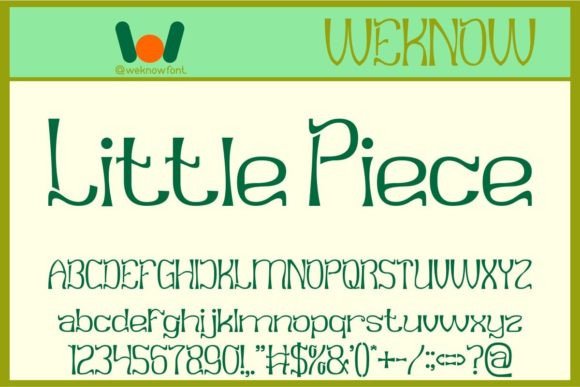
Little Piece: A Font That Brings Joy to Every Design
There’s a particular kind of energy some designs have—a spark that makes you smile before you’ve even read the words. That feeling often starts with typography, and it’s exactly what the Little Piece display font delivers. This isn’t a quiet, background typeface. It’s a character, a mood-setter, and a creative ally for projects that need to radiate warmth and enthusiasm. If your work thrives on personality, Little Piece might just become your new favorite design tool.
Understanding the Visual Character
At its core, Little Piece is an eclectic display typeface. That means it’s designed for impact, not for setting long paragraphs of body text. Think of it as the headline act, the logo star, or the attention-grabbing banner. Its letterforms are crafted with a sense of playful irregularity—subtle curves, varied weights, and a rhythm that feels organic and hand-crafted. It avoids the sterility of perfectly geometric fonts, instead offering a human touch that feels approachable and full of life.
What makes it visually appealing is its balance. It’s bold and expressive enough to stand out, yet it maintains a coherence that keeps it professional. The slight imperfections aren’t flaws; they’re features that give it character. This makes it particularly effective for brands and creators who want to communicate authenticity, creativity, and a touch of whimsy. Whether you’re working on a vintage-inspired project or a modern, energetic campaign, its versatile charm adapts beautifully.
Where This Playful Typeface Truly Shines
The true test of a creative font is in its application. Little Piece excels in scenarios where personality is paramount. For logo design, it can form the cornerstone of a brand identity that’s memorable and full of spirit. Imagine it for a boutique bakery, a children’s activity center, or an indie game studio—it instantly tells a story. In packaging design, it helps products jump off the shelf, especially for items targeting a younger demographic or those positioned as fun and artisanal.
Its energy is a natural fit for social media graphics and web design. On platforms like Instagram or YouTube, where first impressions are made in milliseconds, a header or thumbnail set in Little Piece can significantly boost engagement. It’s equally effective for blog titles, making a site feel more inviting and dynamic. For physical applications, consider it for posters, event invitations, or merchandise like t-shirts and tote bags. It brings a celebratory vibe to any print material.
Strategic Uses for Branding and Marketing
Choosing a premium font like Little Piece is a strategic decision. It’s not just about aesthetics; it’s about communication. Consistent use of a distinctive typeface across all touchpoints—from your website to your business cards to your social media posts—builds powerful brand recognition. When your audience sees that unique, joyful lettering, they’ll immediately associate it with your brand’s personality.
For editorial design in magazines or digital products like e-books, using Little Piece for chapter headings or pull quotes can break up text monotony and guide the reader’s eye. It adds a layer of visual interest that enhances the overall reading experience. In marketing assets such as email headers, sale announcements, or digital ads, its high-impact style ensures your message isn’t just seen, but felt. It helps create a cohesive visual language that speaks directly to your target audience’s emotions.
Making It Work: Practical Typography Advice
A display font like this demands thoughtful pairing. Because it has such a strong personality, it pairs best with simpler, more neutral typefaces. A clean sans serif font or a classic serif font for body text will create a harmonious contrast, allowing Little Piece to headline without overwhelming the viewer. Always test your font pairing in context to ensure the hierarchy is clear and the overall look remains balanced.
Readability is key, even with a stylized font. While Little Piece is crafted for clarity at larger sizes, it’s wise to avoid using it for small, dense paragraphs. Its strength is in headlines, titles, and short, impactful phrases. Before finalizing a design, test it at the intended size and in the intended medium—on a printed poster, a mobile screen, or a product mockup. Review the included font styles; many premium typefaces come with alternates or ligatures that can add further customization to your work.
Finally, consider licensing. For any commercial project—whether it’s a client’s logo, your own business branding, or products for sale—ensure you have the appropriate commercial font license. This protects your work and respects the type designer’s craft. Investing in a quality design asset like Little Piece is an investment in your project’s professional presentation and long-term brand equity.
Bringing It All Together
Ultimately, typography is a silent ambassador for your brand. Little Piece offers a way to inject genuine mirth and vibrancy into your visual communications. It’s a tool for designers, entrepreneurs, and creators who understand that the right typeface does more than convey words—it conveys feeling. By integrating it thoughtfully into your brand identity, you’re not just choosing a font; you’re choosing a partner that helps tell your unique story with energy and charm. Let it be the spark that makes your next project unforgettable.