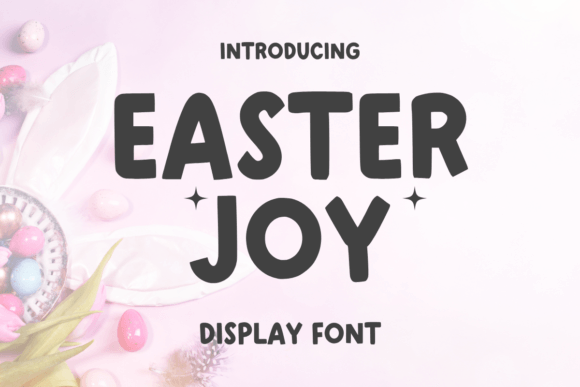
Easter Joy: The Playful Font That Makes Designs Pop
There's something magnetic about typography that refuses to play by the rules. You know the feeling—you're scrolling through design inspiration, and suddenly a piece catches your eye not because it's perfect, but because it's perfectly imperfect. That's the energy Easter Joy brings to the table. This display font doesn't whisper politely in the background; it walks into the room with confetti in its hair and a grin on its face, daring you to look away.
For designers, business owners, and creative minds who've grown tired of sterile, predictable letterforms, Easter Joy offers something genuinely refreshing. Its unconventional shapes and lively strokes create a distinctive aesthetic that feels handmade yet intentional—like a skilled calligrapher decided to have a little fun for once. The letterforms bend and bounce in ways that feel organic, giving your text a sense of movement and personality that most display fonts simply can't match.
Why Playful Typography Matters More Than You Think
We've all seen the design trends come and go—minimalism, brutalism, neomorphism—but one thing that never goes out of style is authenticity. Brands that feel human, approachable, and genuinely creative consistently outperform those that hide behind corporate polish. This is where a font like Easter Joy becomes a strategic asset rather than just a decorative choice.
Consider the brands you actually remember. They're rarely the ones with the safest typography choices. Think about how companies like Mailchimp or Innocent Drinks use quirky, personality-driven design to build instant rapport with their audiences. The right typeface doesn't just display words—it communicates tone, values, and personality before anyone reads a single sentence.
Easter Joy fits into this conversation naturally. Its whimsical character makes it particularly effective for projects that need to feel approachable, creative, and memorable without sacrificing clarity. Whether you're designing a logo for a children's boutique, creating social media graphics for a bakery, or putting together packaging for artisan goods, this font carries a warmth that connects with people on a gut level.
Putting Easter Joy to Work Across Your Projects
The real test of any creative font isn't how it looks in a specimen sheet—it's how it performs across different contexts. Easter Joy shines brightest when used strategically as a headline or accent typeface. Here's where it really earns its place in your design toolkit:
Branding and Logo Design: If you're building a brand identity for something playful—think children's products, creative studios, event planning businesses, or specialty food brands—Easter Joy can anchor your visual personality. A logo set in this typeface immediately signals that your brand doesn't take itself too seriously while still feeling polished and professional. Pair it with a clean sans serif for body text, and you've got a brand system that balances whimsy with readability.
Packaging Design: Shelf presence matters. When consumers are scanning rows of competing products, packaging that feels lively and distinctive wins. Easter Joy works beautifully on product labels, box designs, and hang tags—especially for items targeting families, gift markets, or anyone who appreciates craftsmanship with personality. Imagine it on a jam jar label or a candle box; suddenly the product feels like it has a story to tell.
Social Media Graphics: Instagram feeds and Pinterest boards are battlegrounds for attention. A bold, playful display font cuts through the noise of generic Canva templates. Use Easter Joy for quote graphics, announcement posts, sale promotions, or story highlights. Its distinctive character makes your content instantly recognizable as yours—which is exactly what brand recognition looks like in practice.
Invitations and Event Materials: Birthday parties, baby showers, community events, seasonal promotions—any occasion that calls for celebration pairs naturally with this font's energy. It sets the mood before guests even check the date and time, which is precisely what good invitation design should do.
Editorial Layouts and Blog Graphics: Magazine headers, blog post titles, and digital publication covers benefit enormously from display fonts with personality. Easter Joy can transform a standard layout into something that feels curated and intentional, especially when used sparingly for maximum impact alongside more neutral body copy.
Merchandise and Print Materials: Tote bags, mugs, stickers, greeting cards, posters—the physical products where typography carries the entire design. Easter Joy has enough visual weight and charm to hold its own on merchandise without needing elaborate illustrations to support it.
Making It Work: Practical Typography Advice
Having a great font is one thing. Using it effectively is another. Here are some honest, practical considerations before you start incorporating Easter Joy into your workflow:
Context is everything. A playful display font is a powerful tool, but it's not universal. Easter Joy wouldn't be the right choice for a law firm's annual report or a medical practice's patient forms. Know your audience and match your typography to their expectations and the project's goals. Where it does fit—creative businesses, lifestyle brands, children's products, events, artisan goods—it fits beautifully.
Pair thoughtfully. The best display fonts are usually supported by more restrained companions. Try combining Easter Joy with a geometric sans serif like Montserrat or a humanist sans like Open Sans for body text. The contrast lets the display font command attention where it matters while keeping longer passages comfortable to read. Avoid pairing it with another expressive typeface—that's a recipe for visual chaos rather than creative energy.
Watch your sizing. Display fonts like this one are designed to shine at larger sizes. Use Easter Joy for headlines, subheadings, and callout text rather than paragraphs. At small sizes, its distinctive details can become muddy or distracting, which undermines both readability and the font's own charm.
Check what's included. Before committing to any premium font for a project, review the full character set. Does it include the punctuation and special characters you need? Are there alternate letterforms or stylistic variations that give you more flexibility? Understanding the full scope of what you're working with prevents surprises mid-project.
Test before you commit. Mock up a few designs using Easter Joy before building an entire brand system around it. Create sample social media posts, a rough logo concept, or a test packaging layout. Seeing the font in context—rather than just in a preview window—gives you a much clearer sense of whether it's the right fit.
Licensing matters. If you're using this font for commercial projects—and most designers and business owners eventually do—make sure you understand the licensing terms. A properly licensed commercial font protects you legally and ensures the type designer is fairly compensated for their work. It's a small investment that prevents big headaches later.
The Bigger Picture: Typography as Brand Strategy
Every font choice you make is a brand decision. It might seem small, but typography accumulates meaning over time. When your audience sees the same typeface across your website, packaging, social media, and print materials, it builds a visual language they learn to associate with your business. That's brand recognition in its most fundamental form.
Easter Joy offers something specific in this equation: memorability through personality. In a landscape crowded with brands competing for the same eyeballs, a typeface that makes people smile—or pause, or lean in—is worth its weight in gold. It won't work for every project, and that's actually its strength. It's a deliberate choice, a creative decision that says something about who you are and what your brand values.
For the designer building a client's visual identity, the entrepreneur launching a new product line, or the content creator looking to stand out in a saturated feed, having a font like this in your toolkit means you're ready when the right project comes along. And when it does, you'll have a typeface that doesn't just look good—it feels right.