Mate Mingle: The Display Font That Brings Character to Your Work
There's a moment in every design project where the typeface either clicks or it doesn't. You've nailed the color palette, the imagery feels right, the layout flows—but the typography? It's flat. Generic. It looks like every other Canva template floating around the internet. If you've been there, you know the frustration. That's exactly the kind of problem a font like Mate Mingle was built to solve.
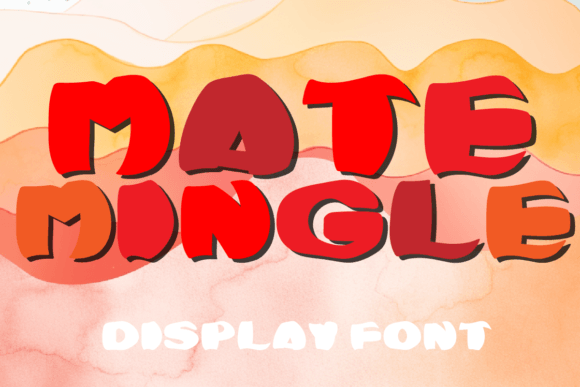
Mate Mingle is a display typeface with personality baked into every curve and stroke. It's bold without being loud, stylish without feeling trendy in a way that'll date your work next year. The letterforms carry a modern sensibility—clean enough for professional use but distinctive enough to make someone pause mid-scroll. Whether you're crafting a brand identity from scratch or refreshing an existing one, this is the kind of typeface that earns its place in your design toolkit.
Where a Font Like This Actually Shines
Let's get practical. Display fonts occupy a specific niche in the typography world. They're not meant for body copy or dense paragraphs. They're designed for impact—headlines, logos, hero sections, packaging callouts, social media posts where you have three seconds to grab attention. Mate Mingle fits squarely in that lane, and it does so with a confidence that feels earned rather than forced.
Think about a small business owner launching a skincare line. The product is natural, thoughtfully made, and priced for people who care about quality. A generic sans serif on the packaging won't communicate any of that. But a display font with warmth and character—something like Mate Mingle—can signal craftsmanship and intention before someone even reads the ingredient list. Typography does that heavy lifting quietly, almost invisibly, but the effect is real.
Here are some specific scenarios where this typeface earns its keep:
- Logo design for startups, boutiques, studios, and personal brands that want to stand apart from corporate minimalism
- Packaging design for food products, cosmetics, artisan goods, and subscription boxes
- Social media graphics where you need headers, quotes, or promotional text to pop against busy backgrounds
- Invitations and event materials for weddings, launches, pop-ups, and workshops
- Website hero sections and landing pages where the headline needs to carry visual weight
- Blog headers and editorial layouts that benefit from a distinctive typographic voice
- Merchandise like tote bags, mugs, apparel, and stickers
- Digital products such as e-books, workshops, and online courses where presentation affects perceived value
- Marketing assets including email headers, ad creatives, and promotional flyers
That's a broad range, and it's worth noting why. A well-designed display font isn't limited to one aesthetic. Mate Mingle's modern typography DNA means it adapts across contexts—looking equally at home on a coffee bag as it does on a tech startup's pitch deck.
Making Typography Work Harder for Your Brand
One of the most overlooked aspects of building a recognizable brand is visual consistency. You see it all the time: a business uses one font on Instagram, a different one on their website, and something else entirely on printed materials. The result feels scattered, unintentional. Customers might not consciously notice, but they register the inconsistency—and it chips away at trust.
Choosing a primary display typeface like Mate Mingle and committing to it across touchpoints solves a surprising number of problems. Suddenly your social media graphics feel connected to your packaging. Your website header echoes the invitation you sent for your product launch. Everything speaks the same visual language, and that repetition builds brand recognition faster than most people expect.
Of course, no single font does everything alone. That's where font pairing becomes essential. A display typeface works best when paired with something more restrained for body text. Think of Mate Mingle as the headline voice—confident, expressive, memorable. Pair it with a clean sans serif or a readable serif font for longer passages, and you've got a typographic system that handles both impact and information gracefully.
A few pairing principles worth keeping in mind:
- Contrast creates clarity. If your display font is ornate or bold, pair it with something simple and geometric for body text. The visual tension between the two creates hierarchy without extra effort.
- Test at multiple sizes. A typeface that looks stunning at 48 pixels might lose its charm at 14. Always check how your pairings hold up across real-world applications—screens, print, mobile devices.
- Limit your palette. Two to three typefaces maximum for any single project. More than that and you're designing a type specimen sheet, not a brand.
- Consider your audience. A playful handwritten font might work for a children's brand but feel out of place on a financial services website. Mate Mingle's versatility helps here—it reads as approachable yet polished.
The Practical Side: Files, Licensing, and Getting Started
When you're evaluating a premium font for commercial use, the technical details matter just as much as the aesthetics. Mate Mingle ships in both OTF and TTF formats, which means compatibility with the software most designers and creators already use—Adobe Illustrator, Photoshop, InDesign, Canva Pro, Figma, Affinity Designer, and plenty of others. No conversion headaches. No hunting for workarounds.
The included file formats also matter for long-term flexibility. OTF (OpenType) files typically support more advanced typographic features, while TTF (TrueType) offers broad compatibility across operating systems and older software. Having both means you're covered whether you're working on a brand-new MacBook or helping a client who's still running legacy design tools.
One thing worth addressing directly: commercial licensing. If you're using a font for client work, merchandise you sell, or any project that generates revenue, you need to confirm the license covers commercial use. This isn't fine print to skim over—it protects both you and your clients. Fonts marketed as creative or commercial fonts should clearly state what's permitted. Always review the license terms before finalizing a project, especially for logos and products where the font becomes part of a trademark or sold good.
Getting started with Mate Mingle is straightforward. Install the files on your system, open your design software, and start experimenting. One approach that works well: set your project headline in Mate Mingle, then try three or four different body text pairings. Live with each option for a few minutes. Share mockups with a friend or colleague. The right combination tends to reveal itself through use, not just theory.
Beyond Aesthetics: Readability and Real-World Performance
There's a tension in display typography that every designer navigates: character versus readability. A font can be gorgeous on a mood board but fall apart in practice—letters blending together at small sizes, tricky letter pairs creating awkward spacing, or stylistic flourishes that confuse more than they communicate.
Mate Mingle handles this balance thoughtfully. The letter spacing is calibrated for display use, meaning it holds together well at larger sizes where these fonts typically live. The character shapes are distinct enough that common problem pairs—like "rn" versus "m" or "cl" versus "d"—remain clear. That attention to legibility might sound like a small thing, but it's the difference between a font that works in production and one that only works in a presentation slide.
For practical readability, keep these considerations in mind:
- Use display fonts at appropriate sizes. Mate Mingle is built for headlines and short text blocks, not 9-point captions or lengthy paragraphs.
- Check contrast against backgrounds. A bold typeface on a busy photograph can disappear. Use solid color blocks, overlays, or high-contrast backgrounds to keep text readable.
- Test across devices. What looks balanced on a 27-inch monitor might feel cramped on a phone screen. Responsive design means responsive typography, too.
- Consider your medium. Print and screen rendering are different worlds. A font that's crisp in digital might need size or weight adjustments for physical materials.
Why the Right Typeface Changes How People Experience Your Work
Here's something that separates good design from forgettable design: the details that audiences feel but can't articulate. A typeface carries emotional weight. Serif fonts suggest tradition and authority. Sans serif fonts signal modernity and clarity. Script and handwritten fonts evoke warmth and personal touch. Display fonts like Mate Mingle occupy a space where personality meets professionalism—expressive enough to be interesting, structured enough to be trustworthy.
For content creators, marketers, and small business owners, that emotional register is a tool. The font you choose for a product launch announcement communicates excitement and confidence. The typeface on your wedding invitation sets the tone before anyone reads a single word. The typography on your website's about page shapes how visitors perceive your credibility.
Mate Mingle works across these scenarios because it doesn't lean too far in any single direction. It's not whimsical, not corporate, not retro, not sterile. It sits in a modern, versatile middle ground that gives you room to style it differently depending on context—paired with earthy tones and natural textures for an organic brand, or set against bold geometric shapes for something more contemporary and urban.
If you've been cycling through free fonts that almost work but never quite fit, investing in a thoughtfully designed creative font can save hours of frustration. The right typeface doesn't just look better—it makes every other design decision easier. Colors fall into place. Layouts find their rhythm. The whole project starts to feel cohesive.
That's the real value of a font like Mate Mingle. It's not just a set of letters. It's a design decision that ripples through everything you create.